
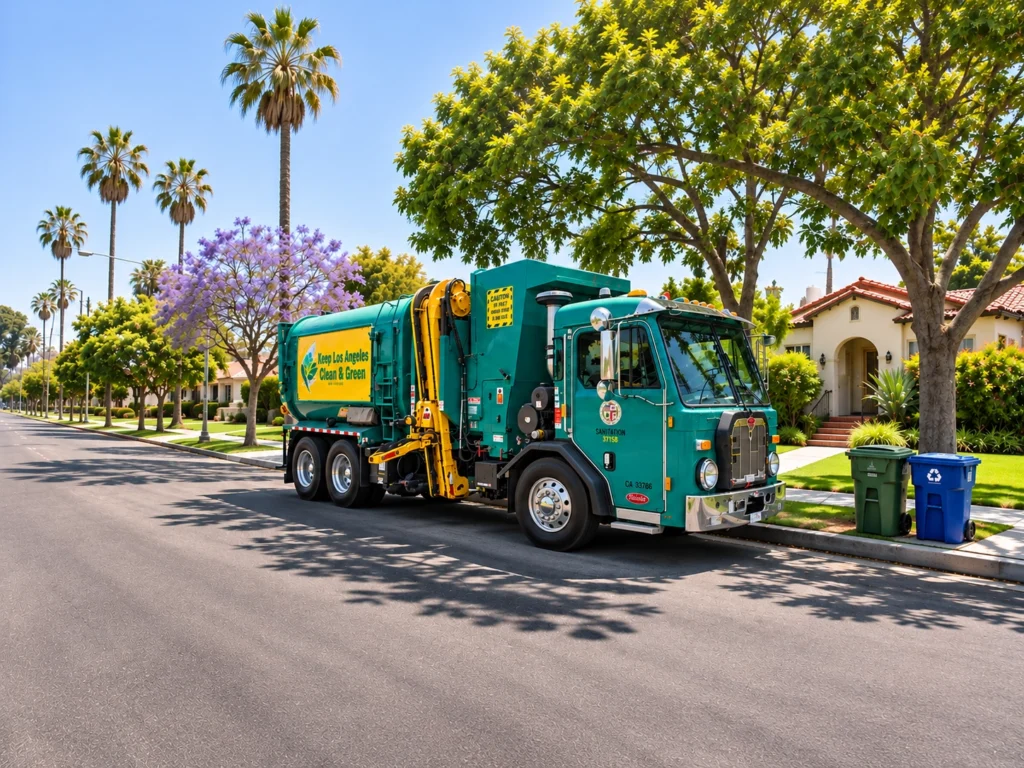
If a garbage truck hit and injured you in California, get medical help, report the incident, document the truck’s identifying information, and contact an attorney before accepting a settlement. Identify whether a private company or government agency operated the truck: a claim against a California public entity generally requires an administrative injury claim within six months. Call The Law Offices of Gerald L. Marcus at 818-784-8544 for a free consultation about your injuries, the available evidence, and your next steps.
A garbage truck collision can leave you dealing with much more than vehicle repairs. You may be unable to work, facing ongoing treatment, or unsure whether to contact a waste company, a city department, or an insurer.
You do not need to resolve those questions before calling for legal help.
Our truck accident attorneys can investigate who operated the truck, identify potentially responsible parties, and pursue a claim supported by the evidence.
What Should I Do Immediately After a Garbage Truck Accident?
1. Request emergency assistance and medical care
Call 911 if anyone is injured. Explain whether someone is trapped, whether the truck is blocking traffic, and whether there are additional hazards.
Keep away from the truck’s wheels, lifting arms, containers, and compaction equipment. Do not approach moving machinery to collect information.
If you have already left the scene, arrange appropriate medical evaluation and describe how the incident happened. Follow treatment instructions and report new or worsening symptoms.
2. Identify the truck—not just the driver
When it is safe, photograph or record:
- The company name or public agency displayed on the truck.
- The license plate.
- The fleet or vehicle number.
- Any visible commercial registration numbers.
- The driver’s name and insurance information.
- The exact location and approximate time.
A fleet number can help distinguish one collection truck from others working nearby. Do not assume the business name on the vehicle identifies every legally responsible party.
3. Capture the collection activity and surroundings
Photographs should show more than damaged vehicles.
Document the truck’s position, nearby bins, curb layout, driveway or alley, traffic signs, and any obstruction affecting visibility. If a container or lifting mechanism struck you, photograph that equipment from a safe distance.
Get contact details for witnesses, including people in nearby homes or businesses. Ask whether anyone has doorbell, security, or dashcam footage.
4. Preserve documents and report the collision
Save medical records, photographs, repair information, insurance correspondence, and the police report number.
If you were driving, comply with applicable California collision-reporting requirements. A DMV SR-1 is generally required within 10 days when anyone is injured or killed, or property damage exceeds $1,000. This is separate from a police report or insurance claim.
5. Get advice before signing anything
Do not sign a settlement release simply because a company representative says the claim is straightforward.
Notify your own insurer promptly when applicable and fulfill your policy obligations. Before giving the opposing insurer a recorded statement or signing broad authorizations, discuss the request with an attorney.
Call 818-784-8544 now. Early investigation can help preserve evidence before routine deletion, repairs, or changes to the scene.
Was It a Private Garbage Truck or a City Sanitation Truck?
This distinction can affect whom you pursue and how quickly you must act.
| Truck operator | What needs investigation |
|---|---|
| Private waste collection company | The driver’s employer, vehicle ownership, insurance, and the conduct that caused the injury |
| City, county, or another public entity | The responsible agency, legal basis for liability, and government claim requirements |
| Private contractor collecting for a city | The contractor’s role and whether there is a separate basis for any public entity claim |
| Operator not yet identified | Fleet markings, collision reports, collection records, and other identifying evidence |
A truck performing city trash collection is not necessarily city-owned or city-operated. A private business may provide the service under a contract.
Likewise, identifying a private contractor does not answer every question about potential responsibility. The actual operating arrangements and facts must be examined.
Can I Sue a City After a Garbage Truck Hits Me?
Potentially. A public vehicle’s involvement does not automatically establish liability, but it also does not mean you have no remedy.
For many injury claims against California state or local government entities, you must first present an administrative claim to the appropriate entity within six months of the injury. A lawsuit has separate requirements and deadlines.
A call to the sanitation department, an incident report, or ongoing discussions with an adjuster should not be assumed to satisfy the formal claim requirement.
The California Courts government claim guide explains the general process. Exceptions and late-claim procedures may apply in some circumstances, so obtain advice even if time has already passed.
Do not wait for the city or its insurer to explain your deadline. Call 818-784-8544 for a case review.
Who May Be Responsible for a Garbage Truck Injury?
Responsibility depends on what caused the incident and the relationships among the parties.
Potentially responsible parties may include:
- The driver, if negligent driving or equipment operation caused the injury.
- The employer, when the driver was acting within the scope of employment, or when the employer’s own negligence contributed.
- A vehicle owner, where a legally supported ownership-liability claim applies.
- A maintenance provider, if negligent repairs contributed to the failure.
- An equipment manufacturer, if a defective component caused or contributed to the injury.
- A public entity, when the facts support liability under applicable government-liability rules.
An employer can be responsible for an employee’s negligent conduct within the scope of employment. But not every company connected with the truck is automatically liable.
The investigation should establish what each party did, how it contributed to the injury, and what evidence supports the claim.
What Evidence Matters in a Garbage Truck Accident?
A collection vehicle may have records that an ordinary passenger car does not.
Depending on the truck and operator, relevant evidence may include:
- Onboard or exterior camera recordings.
- GPS information and route assignments.
- Dispatch communications and collection timestamps.
- Driver inspection reports.
- Brake, tire, steering, and hydraulic maintenance records.
- Information about reversing cameras, alarms, and other safety equipment.
- Prior complaints relevant to the specific problem.
- Physical damage to the truck, containers, and other vehicles.
Not every truck has the same technology, and not every record will be available.
An attorney can identify relevant materials, request their preservation, and pursue access through appropriate legal procedures. A preservation request helps put the recipient on notice; it does not guarantee that evidence exists or will immediately be produced.
The sooner the investigation starts, the better the opportunity to identify evidence that may otherwise become unavailable.
How Do Garbage Truck Injury Claims Happen?
The cause may involve driving, collection activity, equipment, or a combination.
Examples worth investigating include:
- A truck reversing into a pedestrian or occupied vehicle.
- A turn that brings the truck into a cyclist’s path.
- A collision while entering or leaving an alley.
- A collection arm or container striking someone nearby.
- Falling material creating an injury or roadway hazard.
- A mechanical failure that affects control of the vehicle.
A crash involving a large truck is not automatically the truck driver’s fault. The claim needs evidence showing how the injury happened and why another party is legally responsible.
What If I Was Walking, Cycling, or Standing Near My Home?
You do not need to have been inside a car to pursue an injury claim.
Pedestrians, cyclists, passengers, and people near collection areas may have claims when negligent driving or equipment operation injures them.
Tell your attorney exactly where you were and what the truck was doing. Details such as whether the truck was reversing, turning, lifting a bin, or pulling away can guide the investigation.
If you could not collect information because you needed emergency treatment, explain what you remember. A lack of photographs does not automatically prevent a claim.
What If the Garbage Truck Injured Me While I Was Working?
A work-related incident may involve workers’ compensation and, in some cases, a separate claim against a responsible third party.
Report the injury to your employer promptly. California’s Division of Workers’ Compensation warns that failing to report within 30 days can jeopardize benefits.
If the truck was operated by your own employer or a coworker, workers’ compensation rules may limit a direct lawsuit. If an unrelated waste company caused the injury, a third-party claim may also require investigation.
Tell us whether you were working when the accident occurred so the appropriate claims can be evaluated.
What Compensation May Be Available?
A garbage truck injury claim may seek compensation for losses such as:
- Emergency treatment and hospitalization.
- Surgery, rehabilitation, and other necessary care.
- Future medical needs supported by evidence.
- Lost wages and reduced earning ability.
- Physical pain and emotional harm.
- Lasting limitations affecting everyday activities.
The available damages depend on the claim, applicable law, proof of responsibility, and other circumstances. California Courts identifies medical expenses, lost wages, ongoing treatment, and emotional harm as relevant personal injury losses.
There is no dependable “average garbage truck settlement” that tells you what your case is worth.
A large vehicle or commercial insurance policy does not guarantee a large recovery. Your attorney must connect the evidence of fault with the actual consequences of your injuries.
Why Contact The Law Offices of Gerald L. Marcus?
Gerald L. Marcus has practiced law since 1987 and previously worked investigating negligence claims. That background supports the detailed investigation required when responsibility is disputed.
Our firm helps injured people evaluate claims, deal with insurance issues, and prepare cases for settlement or litigation.
For an accepted garbage truck injury case, that may involve:
- Identifying the operator and potentially responsible parties.
- Reviewing public entity deadlines when applicable.
- Seeking preservation of relevant footage and records.
- Documenting injuries, financial losses, and future needs.
- Negotiating from the evidence and preparing for trial when appropriate.
Review our case results and discuss your circumstances with us. Results in other cases do not guarantee a particular outcome.
Your consultation is free. We charge no attorney’s fees unless we recover compensation for you. The written fee agreement explains the fee and responsibility for case expenses.
Frequently Asked Questions
How long do I have to sue a private garbage company?
Many California personal injury lawsuits have a general two-year deadline measured from the injury. Exceptions may apply. If a public entity may also be responsible, a much earlier administrative claim deadline can be involved.
The driver said the company would handle everything. Should I wait?
Report the incident appropriately, but do not rely on an informal assurance to protect deadlines or preserve evidence. Ask for claim information and obtain your own legal evaluation.
What if I do not know the garbage company’s name?
Provide the date, location, approximate time, truck description, and any photographs or report number. Collection schedules and other records may help identify the operator.
Should I accept reimbursement for medical bills?
Have the terms reviewed first. Determine whether the payment is limited to particular expenses or requires releasing the entire injury claim. A release may affect compensation for future treatment and other losses.
Can I call if the company has already denied responsibility?
Yes. A company’s denial is its position, not a court’s decision. The next step is to examine the reasons given and the evidence available.
Injured by a Garbage Truck? Call 818-784-8544 Today
A waste company, public agency, and insurer may each have a different explanation for what happened. You deserve an investigation focused on your injuries and your legal rights.
The Law Offices of Gerald L. Marcus can help you identify the responsible parties, protect important deadlines, and pursue the compensation your case supports.
Call 818-784-8544 now or request a free consultation online.
Do not wait for a recording to disappear or a government claim deadline to approach. Get answers while there is time to act.
 We Don’t Back Down. We Dominate. Over $450 Million Won for Injury Victims.

