
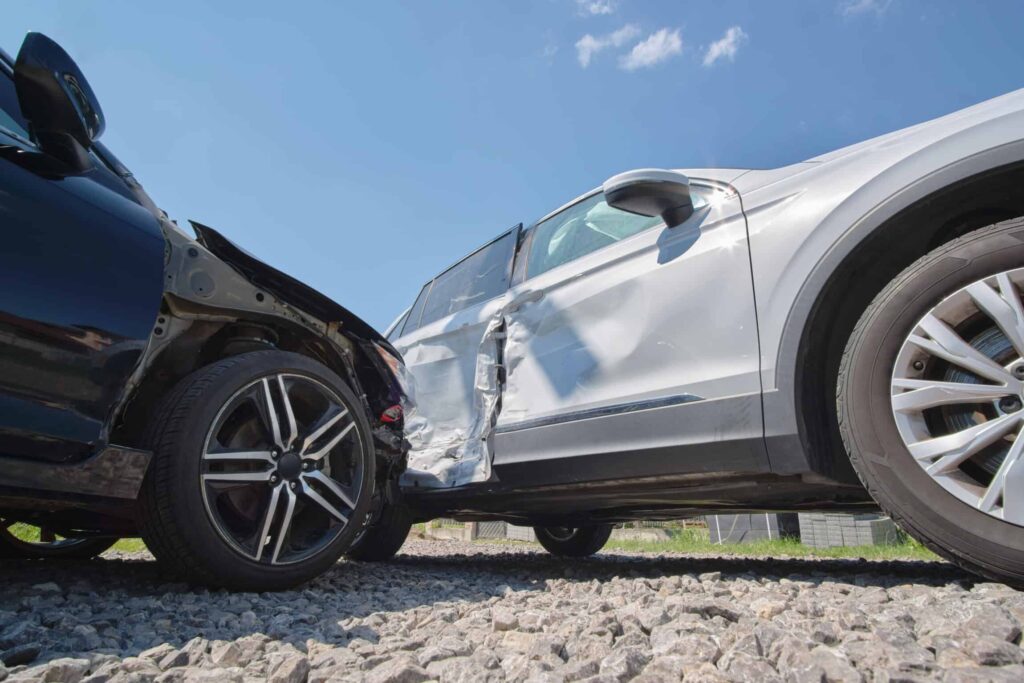
I Was Injured in a T-Bone Crash in California
If you were injured in a T-bone crash in California, get medical care immediately, call 911 to create a police report, photograph the scene and vehicles, gather witness info, avoid giving recorded statements to any insurer, and call The Law Offices of Gerald L. Marcus at 818-784-8544 so we can protect your rights, investigate fault, and pursue full compensation right away.
T-bone (side-impact) collisions are among the most dangerous crashes on California roads. A broadside hit can crush doors, shatter windows, and send powerful forces directly into the head, neck, shoulder, ribs, hips, and spine of the person on the struck side.
If you’ve just been T-boned in Los Angeles or anywhere in California, you’re likely dealing with pain, shock, vehicle damage, and an insurance company already trying to limit what it pays.
This step-by-step guide explains exactly what to do next, how fault is proven in California T-bone wrecks, what your claim may include, how to avoid common insurance traps, and why having an aggressive Los Angeles accident lawyer on your side can dramatically increase your recovery.
Free, no-pressure legal help: Call the California car accident lawyers at The Law Offices Of Gerald L. Marcus at 818-784-8544 or live chat/text us now. You pay nothing up front and not a dime unless we win. We handle cases statewide and can come to you.
Step 1: Get Medical Care Immediately (Even If You “Feel Fine”)
Adrenaline can mask serious injuries for hours or days. Side-impact forces commonly cause:
-
Concussions and traumatic brain injuries (TBI)
-
Whiplash and cervical sprains
-
Rib fractures and internal injuries
-
Shoulder, hip, and pelvic trauma
-
Lumbar disc herniations and sciatica
-
Lacerations from shattered glass and intruding metal
Go to the ER, urgent care, or your physician now. Tell providers you were in a T-bone collision and describe every symptom, no matter how small. Follow up with all referrals (orthopedist, neurologist, physical therapy, imaging). Your medical records create the foundation of your injury claim and connect your symptoms to the crash.
Pro tip: Keep a simple pain journal (daily notes on pain level, limits at work/home, sleep issues). This real-world diary often moves the needle in settlement negotiations.
Step 2: Call 911 and Create an Official Report
If you haven’t already, call 911. The responding agency (LAPD, LASD, CHP, or local PD) documents the scene, parties, and witnesses. If a report wasn’t taken at the scene, go to a station and file one promptly. Your attorney will later obtain the police report and any supplemental diagrams or statements.
Step 3: Capture and Preserve Evidence
Evidence gets lost—fast. Do what you can safely:
-
Photos/Video: Vehicle positions, damage points (especially your door/quarter panel), skid marks, debris, airbag deployment, traffic signals/signs, lane markings, weather/light conditions, and any nearby surveillance cameras or businesses.
-
Witnesses: Names, phone numbers, brief notes of what they saw (e.g., “other driver ran red light”).
-
Dashcams/Ride-share data: Preserve the raw files.
-
Your vehicle: Do not rush repairs before we’ve documented the damage pattern and downloaded vehicle event data, if applicable.
We can take over immediately. Our team sends preservation letters, canvasses for video, downloads EDR (“black box”) data when available, and secures expert inspections.
Step 4: Report the Crash (The Smart Way)
-
Your insurer: Notify your insurance company promptly (most policies require quick notice), but do not give a recorded statement about injuries or fault until you speak with us. Keep it basic: date, time, location, vehicles involved, that you’re seeking medical care.
-
Other driver’s insurer: Do not provide a recorded statement. The adjuster’s job is to minimize your payout. We handle all communications.
-
California DMV Form SR-1: If anyone was injured or property damage is over $1,000 (current threshold), you must file an SR-1 with the DMV within 10 days, regardless of fault. We’ll help you complete this correctly.
Step 5: Don’t Sign Anything or Settle Too Early
Early lowball offers are common—especially in side-impact crashes where injuries can worsen over time. Do not sign medical authorizations, blanket releases, or settlement paperwork without legal advice. Once you settle, you cannot go back for more care or money.
How Fault Works in California T-Bone Collisions
California is a fault (tort) state with pure comparative negligence. That means each party is assigned a percentage of fault, and your recovery is reduced by your percentage—even if you were 1% at fault, you can still recover the other 99%.
Common Fault Scenarios in T-Bone Crashes
-
Red-light/stop-sign violations: Driver enters intersection against a red or fails to stop/yield.
-
Unsafe left turns: A driver turns left across oncoming traffic without a safe gap.
-
Failure to yield from driveways/alleys/side streets.
-
Speeding or distracted driving: Phone use, infotainment, or other distractions.
-
Drunk or drug-impaired driving.
Evidence We Use to Prove Liability
-
Police report diagrams and officer assessments
-
Intersection timing data and signal phase logs (when obtainable)
-
Nearby commercial or residential surveillance video
-
Dashcam footage from you or third parties
-
Event data recorder (EDR) downloads (speed, brake, steering inputs)
-
3D crash reconstruction and biomechanical analysis
-
Phone records (to prove distraction), BAC/chemical test results
-
Witness statements and scene measurements
Bottom line: In many T-bone cases, the striking driver is at fault for blowing a signal or failing to yield—but we never assume. We build the proof early.
What Your T-Bone Injury Claim Can Include
When we handle your case, we pursue every category of damages the law allows:
-
Medical expenses (past & future): ER, imaging, specialists, PT, injections, surgery, rehab, medications, medical devices, psychological counseling.
-
Lost income & loss of earning capacity: Pay stubs, 1099s, employer letters; for self-employed clients, we compile profit/loss and expert projections.
-
Pain, suffering, and loss of enjoyment of life: The day-to-day human impact of your injuries.
-
Property damage: Repairs or total-loss value, rental car, personal items (phones/laptops).
-
Diminished value: Even after repairs, your vehicle may be worth less; we can pursue third-party diminished value when supported.
-
Scarring/disfigurement and permanent impairment.
-
Punitive damages (rare, but possible) in extreme cases like drunk driving.
Medical Bills: Who Pays in the Meantime?
California does not have no-fault PIP. While your case is pending, bills can flow through:
-
Your health insurance (copays/deductibles can be recovered later)
-
MedPay under your auto policy, if you purchased it (usually pays regardless of fault, up to your limit)
-
Medical liens/letters of protection we set up with trusted providers so you can treat now and pay from the settlement later
We coordinate billing to reduce your out-of-pocket stress and negotiate liens down at settlement to put more in your pocket.
Timeline: How Long Will My Case Take?
Every case is unique, but T-bone injury cases often follow this path:
-
Investigation & early treatment (0–90 days): Evidence preservation, liability work-up, medical stabilization plan.
-
Active treatment (1–6+ months): Conservative care; we monitor whether you need pain management or surgery.
-
Demand package (once you reach MMI or a clear future-care plan): Detailed liability proof, medical summaries, bills/records, future cost projections, and damages narrative.
-
Negotiations & settlement (1–3 months after demand, on average): We push for maximum value and won’t recommend a low settlement.
-
Litigation (if needed): If the carrier won’t be fair, we file suit and keep moving. Many cases still settle during litigation.
We move fast without sacrificing value. If speed matters (medical bills, lost wages), tell us—we can often secure advances from certain funding sources or prioritize faster-moving strategies.
Statutes & Deadlines You Must Know (California)
-
Personal Injury: Generally 2 years from the crash date to file a lawsuit.
-
Property Damage: Generally 3 years.
-
Claims against government entities (dangerous intersection, public vehicles): 6 months to file a governmental claim before a lawsuit.
-
Uninsured/Underinsured Motorist (UM/UIM): Deadlines are policy-specific—they can be shorter than the civil statute. Involve us early to preserve your rights.
Do not wait. Missing a deadline can permanently end your claim, even if liability is clear.
What If the Other Driver Blames Me?
Insurers frequently argue:
-
“You were speeding.” We use EDR data, mapping, and expert analysis to rebut.
-
“You had the last clear chance.” Signal timing and line-of-sight studies matter.
-
“Your injuries were pre-existing.” Your medical history is your story; we show how the crash worsened or aggravated conditions.
-
“Low property damage means low injury.” Side-impacts can cause severe trauma despite moderate exterior damage—biomechanics explain why.
Under pure comparative negligence, even if the insurer tries to pin a percentage on you, we fight to drive your percentage down and your recovery up.
The Gerald Marcus Advantage: Why Injured Californians Choose Us
-
Aggressive intersection investigations: We act fast to capture footage before it’s overwritten.
-
Medical network access: We help you see top specialists now, even without health insurance.
-
Settlement-ready presentation: Clear liability proofs + compelling human story = leverage.
-
Trial-tested: Carriers know we’ll file and try cases if needed—which often increases settlement value.
-
You pay nothing unless we win.
Call 818-784-8544 or live chat/text us 24/7. We serve all of California and can meet at your home, hospital, or by secure video.
What To Do (and Not Do) After a California T-Bone Crash
Do:
-
Get medical care and follow your treatment plan.
-
Photograph vehicles, injuries, and the intersection.
-
Save torn clothing, broken glasses, car seats—anything damaged.
-
Keep all receipts (prescriptions, Uber/Lyft to appointments, co-pays).
-
Call us early so we can control the claim narrative and evidence.
Don’t:
-
Give recorded statements to the other insurer.
-
Sign medical releases that allow fishing expeditions into unrelated history.
-
Post about the crash on social media.
-
Delay treatment—gaps hurt your health and your case.
-
Rush into a quick settlement before you know the full extent of your injuries.
Special Issues in T-Bone Collisions
Children in the Vehicle
California’s car-seat laws are strict for good reason. After a crash, child safety seats should often be replaced—even after moderate impacts. We help ensure replacements are covered.
Multi-Vehicle Chain Reactions
At busy LA intersections, a T-bone can trigger secondary impacts. We identify all responsible parties and insurance coverages (primary, excess, UM/UIM).
Rideshare & Delivery Vehicles
Uber/Lyft, DoorDash, Amazon Flex, and other commercial policies have unique coverage triggers depending on whether the app was off, on but no ride, or on-trip. We untangle these layers so no policy escapes responsibility.
Dangerous Intersection Claims
If signal timing, obscured signage, or road design contributed, you may also have a government liability claim with special deadlines. We investigate these quickly.
Frequently Asked Questions (California T-Bone Crashes)
Q: How do we prove the other driver ran the red?
A: We combine witness statements, physical evidence, timing data, and video from nearby businesses/homes. In many cases we also use EDR data and expert reconstruction.
Q: My car is a total loss. Can I get a rental and my personal items reimbursed?
A: Yes—if the other driver is at fault, their carrier should provide a comparable rental and pay for your total loss. We also claim damaged personal property and diminished value where supported.
Q: I didn’t go to the ER the same day. Did I ruin my case?
A: Not necessarily. Seek care now and document when symptoms appeared. We routinely win cases where clients felt “okay” at first but developed pain hours or days later.
Q: What if I was partly at fault?
A: California’s pure comparative negligence still allows recovery. We work to minimize your percentage and maximize your net.
Q: How much is my case worth?
A: Value depends on liability proof, injury severity, medical course, future care, wage loss, and venue (jury pool). We provide a realistic range once we see your records and recovery trajectory.
Call The Law Offices Of Gerald L. Marcus Today
The Law Offices of Gerald L. Marcus
Call: 818-784-8544 | Live Chat/Text: Available 24/7
Service Area: All of California. We can come to you.
Fee: No recovery, no fee. You pay nothing up front.
The Sooner You Call Us, The Sooner We Can Help!
 We Don’t Back Down. We Dominate. Over $450 Million Won for Injury Victims.
