
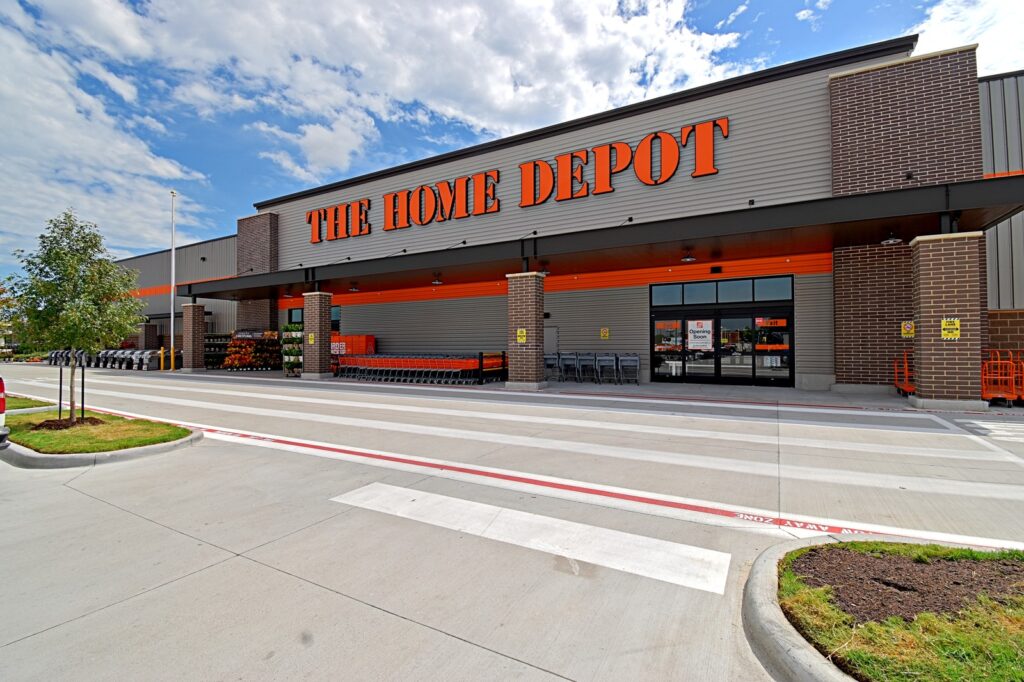
Injured In A Home Depot In California?
Getting hurt at a big box store like Home Depot isn’t just another “slip and fall.”
Our firm has extensive experience representing clients injured in home improvement stores like Home Depot, where the risks of accidents involving construction materials and heavy machinery are significant.
These cases involve national safety policies, in-store inspection protocols, contractor/vendor activity, pallet-jack and forklift traffic, end-cap displays, seasonal inventory overstock, and surveillance footage that can make—or break—your claim.
If you or a loved one was injured in a Home Depot in California—from Los Angeles and beyond—this guide shows you exactly what to do, what not to do, and how our injury team builds aggressive, evidence-driven cases that insurance companies can’t ignore. We have a proven track record of securing favorable outcomes for clients in these complex cases.
Common Home Depot Hazards That Cause Serious Injuries
Home Depot stores are huge, busy, and inventory-dense. The most frequent hazards we see in California Home Depot injury claims include:
- Slip hazards: Fresh mopping without cones; spilled paint, sealants, fertilizers; water tracked in from garden center or rain; condensation from HVAC; leaking pallets or coolers. These conditions often lead to a home depot slip or a slip and fall accident, which are among the most common incidents resulting in injury claims.
- Trip hazards: Pallet fragments, broken zip ties, plastic wrap, cords, product debris, uneven mats/rugs, stock left in aisles, price tags or shelf strips on the floor.
- Falling merchandise (“falling object” injuries): Overstock on high racks; unsecured boxed items; improperly stacked lumber, pavers, tile; unsecured “end cap” displays.
- Equipment incidents: Pallet jacks, forklifts, order pickers operating in customer aisles; lack of spotters; blocked sightlines; no audible horn; failure to secure work zones.
- Parking lot and curb injuries: Broken concrete, potholes, wheel stops placed in pedestrian paths, oil slicks; poor lighting; lack of paint striping or warning markings.
- Doorway transitions: Wet mats, curled edges, missing grip backing, abrupt changes in level.
- Garden center risks: Wet surfaces, loose gravel/soil, hoses across walkways, falling clay pots, unstable stacked soil bags, carts striking ankles.
- Assembly/Tool Rental areas: Loose parts on floor, defective tools, poor supervision during demos.
These hazards can result in a range of common injuries. Minor injuries such as cuts, bruises, and sprains are frequent, but more serious injury can also occur, including spinal injuries from falls or impacts. Falling objects and equipment incidents can lead to severe harm, while slip and fall accidents may cause anything from minor bruises to long-term disabilities.
In every one of these scenarios, the core legal question is the same: What did the store know (or what should it have known) about the danger, and what did it do about it? Home Depot’s negligence in addressing these hazards is a key factor in determining liability.
California Law In A Nutshell: Duty, Notice, And Reasonableness
To win a California premises liability case against a retailer, we focus on three building blocks in personal injury cases:
- Duty of Care: Home Depot owes customers (invitees) a duty to keep the premises reasonably safe—including regular inspections, cleanup protocols, employee training, and warnings when hazards exist. If you are injured in a Home Depot in California, you may need to sue Home Depot to recover damages for your injuries.
- Notice: We prove Home Depot knew or should have known of the dangerous condition. That can be actual notice (store employees or the store manager saw the hazard, prior complaints, or created it) or constructive notice (hazard existed long enough that reasonable inspections would have found it). Inspection logs and video are crucial.
- Causation & Damages: We link the hazard to your injury and prove the full scope of your losses—medical bills, future care, lost wages, loss of earning capacity, pain and suffering, and more.
California also follows pure comparative negligence: even if the store blames you (wrong shoes, “not watching,” walking too fast), you can still recover damages—reduced by any percentage of fault a jury assigns to you. Our job is to minimize or eliminate any claim that you were to blame.
What To Do Immediately After A Home Depot Injury (Los Angeles & Statewide)
Time is evidence. The faster you act, the stronger your case.
4.3 Document the Scene
Take photos of the hazard, your injuries, and the surrounding area. If possible, collect witness statements from anyone who saw the incident, as these can be crucial evidence alongside photos and video footage. Save any receipts or documents related to your visit.
4.4 Seek Medical Attention
Even if you feel fine, get checked by a doctor as soon as possible. Some injuries may not show symptoms right away. Prompt medical treatment is important not only for your health but also to document your injuries and support any potential legal claims.
4.5 Report the Incident
Notify a manager or supervisor and ask for a copy of the incident report. Make sure the report accurately describes what happened.
4.6 Contact a Lawyer
A lawyer can help you navigate the claims process and protect your rights. Your claim will likely be handled by the store’s insurance company, which may use third-party adjusters to investigate and potentially deny your claim. An attorney can communicate with the insurance company on your behalf and help you build a strong case.
1) Report The Incident—In Writing—Before You Leave
- Ask for a manager and request an incident report.
- Describe the hazard precisely (e.g., “clear liquid from a leaking planter,” “broken pallet slat protruding,” “tile boxes stacked above shoulder height fell”).
- Ask for the store number and the manager’s full name and badge/ID if available.
- Request that surveillance video be preserved. Say this clearly.
2) Photograph And Video Everything
- The hazard, the entire aisle, ceiling/racks above you, warning signs (or lack of them), and your clothing/shoes.
- Photograph your injuries (cuts, swelling, bruising) and any soaked clothing. Keep your shoes and clothes—don’t wash them.
3) Identify Witnesses
- Get names, phone numbers, and emails for anyone who saw the hazard, the fall, or employees walking by without fixing it. Witness credibility wins cases.
- Collecting witness statements is crucial, as they provide key evidence to help prove negligence and support your injury claim.
4) Seek Medical Care Immediately
- Go to urgent care or ER the same day to obtain prompt medical treatment. Delays let insurers argue “no injury” or “not related.”
- Tell providers exactly what happened (“slipped on wet floor in Home Depot in Los Angeles”).
5) Save Your Receipts & Proof You Were There
- Keep purchase receipts, order numbers, curbside pickup confirmations, or credit card statements. Proving presence is simple—if you preserve it.
6) Call A California Home Depot Injury Lawyer
You need a team that will send preservation letters for surveillance video and logs, secure inspection policies, and stop the insurer from controlling the narrative. The store’s insurance company will be involved in handling your injury claim, and they may use third-party adjusters to represent their interests.
How We Build Aggressive, Evidence-Driven Cases Against Big Retailers
When you hire our Los Angeles injury firm, we move immediately:
- Surveillance Video Preservation: We send a spoliation/preservation letter demanding that Home Depot retain all relevant camera angles, time stamped from at least 2–3 hours before the incident through cleanup.
- Inspection & Sweep Logs: We request “sweep sheets,” digital inspection records, and cleaning logs for the area, plus staffing rosters and who was assigned to the aisle that day.
- Training & Safety Policies: We obtain manuals and store policies on inspections, floor care, spill protocols, and high-bay stocking.
- Maintenance & Vendor Records: If a third-party vendor (e.g., stocking, cleaning, or delivery contractor) created the hazard, we pursue them too.
- Scene Inspection & Measurements: We measure coefficient of friction (slip resistance), lighting levels, distances, and elevation changes.
- Footwear & Clothing Analysis: Your shoes and clothing can corroborate a wet, oily, or dusty surface.
- Medical & Economic Evidence: We build a complete damages model—diagnoses, treatment plans, future care, and lost earnings—with treating physicians and experts.
A home depot accident lawyer can help you recover compensation for your injuries by gathering evidence, assessing your damages, and negotiating with Home Depot or their insurers to ensure you receive a fair settlement.
The “Notice” Battle: How We Prove Home Depot Should Have Known
Retailers often claim a hazard “just happened.” We counter by:
- Video review to show how long the hazard existed and whether employees walked past it.
- Sweep/inspection logs that don’t match the reality on video.
- Prior complaints or similar incidents in the same aisle or store.
- Employee admissions that a spill or overstock issue was known but unresolved.
- Seasonal patterns (e.g., spring garden center water trails, holiday overcrowding of displays).
- Industry standards for inspection frequency and barricading.
Bottom line: if a hazard existed long enough that a reasonable store would have found and fixed it, notice is satisfied.
Damages You Can Recover In A California Home Depot Injury Case
- Medical expenses: ER/urgent care, imaging, orthopedics, PT, injections, surgery, medications, medical devices.
- Future medical care: Ongoing therapy, pain management, surgical recommendations, home modifications.
- Lost wages & earning capacity: Missed work, reduced hours, inability to perform prior job duties, vocational impacts.
- Pain & suffering: Physical pain, limitations, loss of enjoyment of life, anxiety/PTSD.
- Out-of-pocket costs: Transportation, prescriptions, household help.
- Property damage: Broken phone, glasses, etc.
- Punitive damages (rare): Only if there’s reckless or malicious conduct (e.g., knowingly ignoring a serious, persistent hazard).
We pursue every category of damages supported by the evidence so you don’t leave money on the table. Securing a fair settlement is crucial to ensure you receive compensation for all your losses, and most personal injury lawyers handle these cases on a contingency fee basis, meaning you pay nothing unless your case is won.
Don’t Make These Costly Mistakes
- Giving a recorded statement to the retailer’s insurer before you speak to a lawyer.
- “I’m fine” statements to staff or on medical intake forms—later used to downplay injuries.
- Washing or tossing your clothing or shoes (important evidence).
- Posting about the fall on social media. Insurers monitor this.
- Skipping follow-up care or ignoring medical advice (gives them an opening to attack causation).
Special Situations We Handle
Falling Merchandise / High-Bay Stocking
When items fall from height, we investigate stacking method, safety straps, overhang, and whether employees used cages or mesh. Video and prior incident data are critical.
Forklifts, Pallet Jacks & In-Aisle Equipment
We examine traffic control, spotter use, audible warnings, cones/barricades, and compliance with training protocols. Multiple defendants may be involved (store + contractor).
Parking Lot & Exterior Claims
We document defective asphalt, wheel stops, curbs, lighting, and drainage. Exterior hazards often require maintenance contracts and inspection records.
Children & Elderly Shoppers
We tailor damages evidence for vulnerability, healing time, and long-term impacts, which can significantly increase case value.
Workers & Vendors Hurt On-Site
If you were working (Home Depot employee or vendor), you may have a workers’ comp claim plus a third-party negligence claim against contractors or other entities.
Garden Center Hazards: Unique Risks and Injury Claims
The garden center at a Home Depot store is a vibrant, bustling area—but it’s also one of the most hazardous sections for shoppers. Wet floors from watering plants, spilled fertilizers, and loose gravel or soil can create dangerous slip and fall conditions. Uneven terrain, hoses stretched across walkways, and unstable stacks of heavy items like clay pots or soil bags increase the risk of fall accidents and falling objects. These hazards can cause severe injuries, including traumatic brain injuries, spinal cord injuries, and broken bones.
If you’ve suffered a slip and fall or been struck by falling merchandise in a Home Depot garden center, your first priority should be to seek medical attention—even if your injuries seem minor at first. Some injuries, like head trauma or spinal cord injuries, may not show symptoms immediately but can have lasting consequences. After receiving medical care, consult with a personal injury lawyer experienced in handling Home Depot accident claims. They can help you file a premises liability claim, gather evidence, and pursue fair compensation for your medical expenses, lost wages, and pain and suffering. Don’t let the complexity of these cases or the store’s insurance company stand in the way of your recovery—get the support you need to protect your rights.
Neck Injuries at Home Depot: What Victims Need to Know
Neck injuries are a frequent and often serious result of Home Depot accidents, especially in slip and fall incidents or when falling merchandise strikes a customer. These injuries can range from mild strains to severe spinal cord injuries that may lead to permanent disability. Neck injuries can cause chronic pain, limited mobility, and even impact your ability to work or perform daily activities.
If you experience a neck injury at a Home Depot store, it’s crucial to seek medical care right away and follow all recommended treatment plans. Prompt diagnosis and documentation are essential for both your health and your personal injury claim. Under California law, you have the right to pursue compensation for your medical expenses, lost income, and pain and suffering if your injury was caused by the store’s negligence—such as failing to secure merchandise or address a known hazard.
A personal injury lawyer can guide you through the process of filing a claim, ensuring that all aspects of your injury—including potential long-term effects and permanent disability—are fully considered. They will work to hold Home Depot accountable and help you recover the compensation you deserve for your medical care, lost income, and the impact on your quality of life.
Home Depot Accident Statistics: The Hidden Dangers Revealed
Accident statistics from Home Depot stores across California reveal a troubling pattern: many injuries are the direct result of negligent maintenance, improperly stacked merchandise, and a lack of adequate warning signs. Slip and fall incidents are among the most common accidents, often caused by wet floors, trip hazards, or debris left in aisles. Falling merchandise—especially in high-traffic areas like the lumber and garden sections—poses a significant risk of serious harm, including head injuries and crush injuries.
California premises liability law requires property owners like Home Depot to maintain a safe environment for customers. When the store fails to address dangerous conditions or provide proper warnings, they can be held liable for resulting injuries. If you’ve been hurt in a Home Depot accident, it’s important to consult with a personal injury lawyer who understands the nuances of premises liability law and can uncover the hidden dangers that contributed to your fall or injury.
Your attorney will investigate whether negligent maintenance, lack of warning signs, or other violations played a role in your accident. By building a strong case, they can help you pursue fair compensation for your injuries and hold Home Depot accountable for failing to protect its customers. Don’t let your injury become just another statistic—take action to safeguard your rights and your future.
How Much Is A Home Depot Injury Case Worth In California?
There’s no one-size-fits-all answer. Value depends on:
- Liability strength: Clear hazard, notice, safety violations, video support.
- Injury severity: Objective findings (MRI/X-ray), treatment pathway, permanence, surgery.
- Economic losses: Time off work, job changes, future care costs.
- Comparative fault: How much—if any—is assigned to you.
- Venue: Los Angeles County vs. other counties can influence settlement posture.
What we promise: relentless case building to maximize provable damages and leverage that makes the defense pay attention.
Deadlines Matter: California Statutes Of Limitations
- General personal injury: Typically 2 years from the date of injury.
- Claims involving government entities (e.g., city-owned lots near the store): 6 months to present a government claim, then additional deadlines apply.
- Minors and other exceptions may extend deadlines.
Do not wait. Video and logs can be overwritten in days or weeks. The sooner we act, the more evidence we preserve.
Our Results-Driven Process (No Upfront Fees)
- Free consultation and strategy call with a Home Depot injury lawyer.
- Immediate evidence preservation (video, logs, policies).
- Medical coordination so you can focus on healing.
- Aggressive negotiation backed by investigation, not guesswork.
- Trial-ready posture from day one.
- No fees unless we win.
Our firm works on a contingency fee basis, meaning you pay nothing unless we win your case.
Frequently Asked Questions: California Home Depot Injury Claims
Q: I was injured in a Home Depot in Los Angeles—do I really need a lawyer?
A: Yes. Big retailers and their insurers move fast to shape the record in their favor. We lock down video, sweep logs, and policies and stop the insurer from using your words—and delays—against you.
Q: How do I prove Home Depot knew about the hazard?
A: Through video, inspection logs, employee testimony, and prior complaints. If the hazard existed long enough, the law treats it as if they should have known.
Q: What if I slipped but didn’t see what I stepped on?
A: That’s common. Photos, clothing/shoe testing, and video can still prove the surface was wet/oily/dusty and that the store failed to warn or clean.
Q: I was partly distracted—do I lose my case?
A: No. California’s pure comparative negligence allows recovery even if you share some fault. We work to minimize any percentage assigned to you.
Q: The store called me and asked for a recorded statement. Should I do it?
A: Not before speaking with us. Insurers ask questions designed to limit your claim. Let us handle communications.
Q: How long do I have to file?
A: Generally 2 years from injury (different rules for government-related claims; talk to us immediately).
Q: What if the employee with the mop caused my fall?
A: If store staff created the wet condition and failed to warn or block the area, liability is often strong.
Q: A forklift/pallet jack hit me—who pays?
A: We pursue the store and any contractors involved. Video and equipment logs are key.
Q: What evidence should I keep?
A: Photos, medical records, receipts, witness info, unwashed clothing and shoes, and your incident report number/manager’s name.
Q: Will my case settle or go to trial?
A: Most resolve without trial, but the best settlements come when we’re ready and willing to try the case.
Step-By-Step Checklist You Can Follow Today
- Photograph the hazard, aisle, warning cones (or lack), and your injuries.
- Report the incident to a manager; request video preservation and an incident report.
- Collect witnesses (names, phones, emails).
- Seek medical care same day; follow all recommendations.
- Save clothing/shoes—don’t wash them.
- Call our Los Angeles Home Depot injury lawyers to start evidence preservation and protect your claim.
Ready To Fight Back? Talk To A California Home Depot Injury Lawyer Today
If you were injured at a Home Depot anywhere in California, don’t let the insurer decide what your case is worth. Speak with a home depot accident lawyer in a free consultation to discuss your legal options and get a free, no-obligation case review with our injury team.
We’ll preserve the evidence, build the case, and pursue the maximum compensation you deserve—no fees unless we win.
Call The Law Offices Of Gerald L. Marcus at 818-784-8544 for a 100% free case evaluation.
 We Don’t Back Down. We Dominate. Over $450 Million Won for Injury Victims.
