
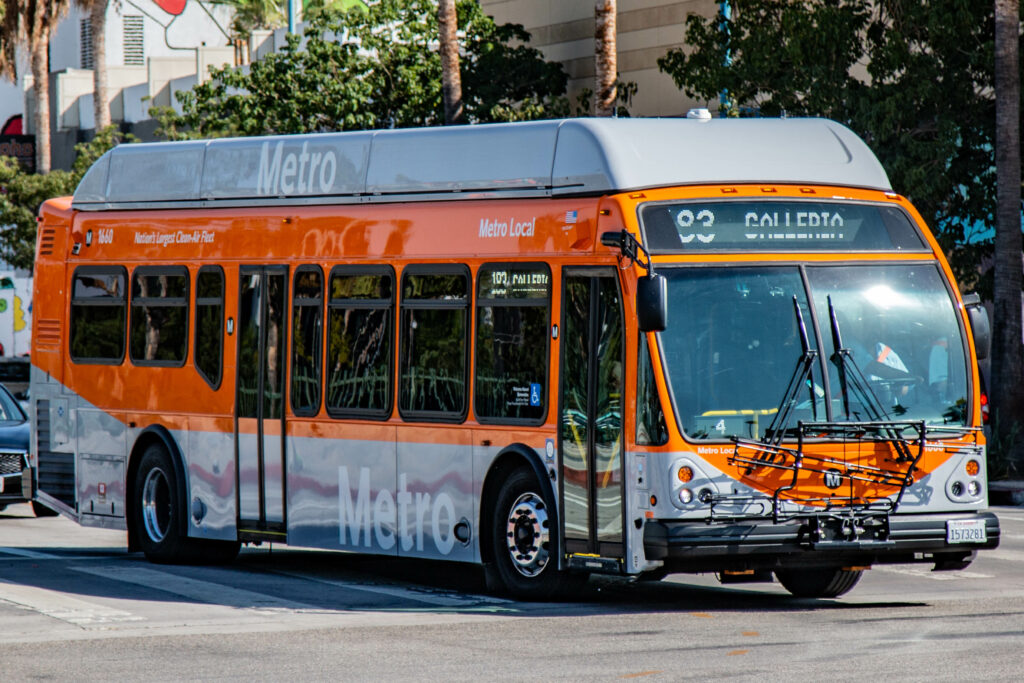
Injured On A Los Angeles Metro Bus?
If you were injured on a LA Metro bus, you are dealing with a different kind of injury claim—one that can involve public-entity deadlines, time-sensitive video evidence, and a fast-moving defense strategy. The Law Offices Of Gerald L. Marcus helps injury victims throughout Los Angeles and across California pursue maximum compensation after serious accidents, including public transit injuries.
Call 818-784-8544 for a FREE consultation. Don’t wait. Waiting hurts your case. The sooner you call us, the sooner we can help you protect evidence, protect your claim, and start building leverage.
What should I do if I’m injured on an LA Metro bus?
If you’re injured on a LA Metro bus, you should:
-
get medical attention immediately,
-
report the injury to the bus operator and request that an incident report be made,
-
take photos/video of the bus, your injuries, and the scene,
-
collect witness contact information and identify cameras,
-
preserve proof of your ride (TAP card/app receipts), and
-
contact a lawyer quickly because claims involving public agencies can have short deadlines and key footage can be overwritten.
Call 818-784-8544 for a FREE consultation. Don’t wait—waiting hurts your case.
Why LA Metro bus injury cases are different
A typical car crash claim usually starts and stays in the insurance world. A Metro bus injury can be different because it may involve:
-
Public-entity claim requirements (often shorter notice deadlines than standard injury cases)
-
Video evidence controlled by a transit agency or third parties
-
Internal incident documentation (operator reports, dispatch logs)
-
Multiple responsible parties (Metro, a private contractor, another driver, maintenance vendors, security providers)
LA Metro’s Legal Services function publicly notes it accepts and processes claims and handles subpoenas and video-related records—an important reminder that evidence and records exist and may require prompt action.
Also, most people do not realize this until it’s too late: many personal injury claims in California are generally subject to a two-year statute of limitations, but public-entity claims can require earlier claim presentation, often measured in months—not years.
Don’t wait. Call 818-784-8544.
Step-by-step: What to do immediately after being injured on an LA Metro bus
Step 1: Treat it like a medical emergency (even if you “feel okay”)
Bus injuries commonly involve:
-
head impact and concussion symptoms that develop later
-
neck/back injuries with delayed pain
-
fractures, sprains, or torn ligaments
-
internal bruising and soft tissue trauma
If you hit your head, feel dizzy, nauseated, confused, or develop headaches, get evaluated immediately. If you have numbness, tingling, weakness, severe pain, or trouble walking—do not “wait and see.”
Your health comes first. Your claim also depends heavily on medical documentation that ties symptoms to the incident.
Call 818-784-8544 for a FREE consultation after you’re safe.
Step 2: Report the injury to the bus operator and request documentation
Before you leave the scene (if you can), do all of the following:
-
Tell the operator you are injured and need an incident report.
-
Ask for the bus number, route number, direction, and the time of the incident.
-
Note the operator’s name or badge ID if visible.
-
If police respond, ask for the report number and agency.
If you cannot do this yourself, ask a companion or a bystander to do it for you.
Why this matters: In public transit cases, identifying the right vehicle, the right operator, and the right time window is often the difference between getting helpful footage and getting “we can’t locate it.”
Don’t wait—call 818-784-8544.
Step 3: Photograph and video everything you can (safely)
Evidence disappears fast. Take wide and close photos of:
-
the bus exterior (including bus number)
-
the interior area where you fell or were hit
-
any hazard (wet floor, debris, broken step, loose handrail)
-
your injuries (and again over the next 72 hours as bruising develops)
-
the stop location, street signs, lighting, and road conditions
-
any other vehicles involved (plates, damage, positions)
If the bus made a sudden stop, capture:
-
whether you had a seat
-
where you were standing
-
handholds that were missing or obstructed
-
crowding conditions
Step 4: Collect witness information immediately
Witnesses disappear quickly at a bus stop. Get:
-
names
-
phone numbers
-
brief notes of what they saw
Witnesses are especially important when Metro or an insurer argues:
-
“No unusual stop occurred,” or
-
“Passenger wasn’t holding on,” or
-
“They fell due to their own movement.”
Step 5: Preserve proof you were on the bus
This is overlooked constantly. Preserve:
-
TAP card history (screenshot)
-
Metro app receipts or confirmations
-
any transfers or fare records
-
timestamped location history (if relevant and you’re comfortable)
-
any texts/calls made immediately after the incident (timestamps help)
Step 6: Do not give a recorded statement “just to open the claim”
You may be contacted quickly for “a simple statement.” Be careful. Recorded statements are often used to:
-
minimize the seriousness of your injuries
-
create comparative fault (“you weren’t holding on”)
-
lock you into language before you know the diagnosis
If you need guidance, call 818-784-8544 before you speak.
Common ways people get hurt on LA Metro buses
Metro bus injuries aren’t limited to crashes. Many claims involve operational and safety failures.
1) Sudden stop injuries (hard braking)
This is one of the most common bus injury patterns. People get thrown:
-
into poles
-
into seats
-
onto the floor
-
into other passengers
-
against doors or fare equipment
Key issues: Was the stop reasonable under the circumstances? Was the driver speeding, distracted, tailgating, or driving aggressively? Was the bus overcrowded? Were handholds available?
2) Slip and falls while boarding or exiting
Common hazards include:
-
wet steps
-
worn anti-slip strips
-
uneven step height
-
bus kneeling/ramp issues
-
slippery sidewalks at stops
3) Door-related injuries
Passengers can be struck or trapped by doors due to:
-
premature closing
-
misalignment
-
operator error
-
crowded entry/exit conditions
4) Wheelchair ramp / ADA equipment malfunctions
Ramp deployment failures and securement issues can cause devastating injuries. These cases often involve equipment condition, operator training, and maintenance records.
5) Collision with another vehicle
Metro buses are frequently involved in:
-
side-swipe collisions
-
intersection impacts
-
lane-change crashes
-
rear-end impacts
6) Assaults / negligent security issues (fact-specific)
When a foreseeable safety risk is ignored—particularly in repeated-problem areas—liability may expand, depending on facts and applicable legal standards.
7) Bus stop injuries (dangerous stop location or property condition)
Some injuries occur at or near the stop itself:
-
broken sidewalks
-
poor lighting
-
missing warnings
-
dangerous placement that forces riders into traffic flow
Who can be liable for an LA Metro bus injury?
Liability can involve one or more parties, depending on what caused the injury:
Metro / transit agency liability
Possible when injury stems from:
-
unsafe operation (speeding, harsh driving, unsafe lane changes)
-
failure to maintain safe conditions (steps, rails, floors)
-
equipment problems (doors, ramps, securement systems)
-
unsafe policies or training failures (fact-dependent)
Another driver’s negligence
If a car caused a crash or forced an emergency stop, that driver may be liable—even if you were on the bus.
Contractors and maintenance vendors
Some transit functions can involve third parties (maintenance, security, etc.). If a defect or negligent service contributed, liability can expand.
Government entity or roadway condition (special rules)
If a dangerous road condition contributed, government-related claim procedures may apply.
Important: Cases involving public entities can have special claim presentation rules and deadlines that are shorter than the typical two-year personal injury deadline.
Don’t wait. Call 818-784-8544.
Deadlines: Why you must act quickly in a Metro bus injury case
Standard California personal injury deadline (often 2 years)
California Courts’ self-help guidance lists personal injury: 2 years from the injury as a common statute of limitations.
Claims against public entities can require much earlier action (often 6 months)
California Government Code section 911.2 provides that certain claims relating to injury must be presented within a shorter window (commonly referenced as six months) in public-entity claim practice.
The City of Los Angeles also publicly states that claims for death or injury must be filed no longer than six months after the date of occurrence under Government Code § 911.2. cityattorney.lacity.gov
Practical takeaway: If Metro or another government agency may be involved, you should treat your case as time-sensitive from day one.
Call 818-784-8544 now. Don’t wait.
Evidence that wins LA Metro bus injury cases
These cases are won with documentation—not assumptions.
1) Bus and intersection camera footage
Video may exist from:
-
bus interior cameras
-
bus exterior cameras
-
stop-area cameras
-
nearby businesses
-
traffic cameras
-
dashcams from other vehicles
The risk: footage can be overwritten. Move quickly.
2) Operator report and dispatch logs
These can confirm:
-
time of incident
-
route and bus ID
-
sudden braking events
-
collisions or near-collisions
-
radio/dispatch communications
3) Maintenance and inspection records
For door, ramp, step, and slip hazards, records can show:
-
prior problems
-
repair history
-
inspection practices
4) Medical records and injury timeline
The most valuable cases typically have:
-
prompt evaluation
-
consistent reporting of symptoms
-
objective findings when applicable (imaging, clinical tests)
-
documented functional limitations
5) Witness statements
Independent witnesses can destroy the defense narrative.
What compensation can you recover after being injured on an LA Metro bus?
A bus injury claim may include:
Economic damages
-
ambulance, ER, hospital and surgery
-
imaging and specialist care
-
physical therapy, rehab, medications
-
future medical care and long-term treatment
-
assistive devices and home modifications (serious cases)
-
lost wages and reduced earning capacity
-
out-of-pocket expenses (transport, help at home, etc.)
Non-economic damages
-
pain and suffering
-
emotional distress
-
PTSD/anxiety (especially after violent incidents)
-
loss of enjoyment of life
-
permanent impairment or disability
-
scarring/disfigurement (when applicable)
In some cases: punitive-type exposure (fact-specific)
Punitive damages typically depend on the defendant and facts; public entities often have special rules/limitations. An attorney should evaluate the scenario before making promises.
If you want maximum compensation, you need maximum proof. Call 818-784-8544.
Why insurers and agencies fight Metro bus injury claims (and what they say)
Expect one or more of these defenses:
“The stop was normal—passengers should hold on.”
They may claim you failed to brace. Evidence that defeats this includes:
-
video showing the severity of the stop
-
witness testimony
-
documentation of overcrowding and lack of handholds
-
proof of aggressive driving or unsafe following distance
“You fell because you weren’t watching where you were going.”
This appears in slip-and-fall boarding claims. Photos, video, and hazard proof matter.
“You weren’t actually hurt” or “you waited too long”
Gaps in treatment are used as weapons. Treat promptly and follow up.
“It’s a pre-existing condition”
This is common with neck/back injuries. The counter is a clean medical narrative showing changes after the incident and consistent symptoms.
“We can’t locate the bus / footage / report”
This is why you document bus number, route, time, and location immediately.
Don’t wait. Call 818-784-8544.
LA Metro bus injury timeline: what a strong case typically looks like
Phase 1: Days 1–14 (critical window)</h2>
-
medical evaluation and treatment plan
-
incident report confirmation
-
evidence preservation steps (video, witness outreach)
-
claim strategy to prevent damaging statements
Step 2: Weeks 2–12</h2>
-
ongoing treatment and specialist follow-ups
-
documentation of restrictions and missed work
-
deeper liability investigation
-
record requests (as appropriate)
Phase 3: Demand and negotiation (months, depending on injury severity)</h2>
-
complete damages package
-
negotiation from strength
Step 4: Litigation (if necessary)</h2>
If a fair resolution won’t happen voluntarily, litigation can be needed to force evidence production and accountability.
What NOT to do after being injured on a Metro bus
-
Do not delay medical care
-
Do not leave without identifying the bus/route/time
-
Do not assume video will “be there later”
-
Do not give recorded statements without guidance
-
Do not accept quick settlement offers before prognosis is clear
-
Do not downplay symptoms in early records
-
Do not post details on social media that can be misinterpreted
Call 818-784-8544. Don’t wait. Waiting hurts your case.
Metro bus injury scenarios (and the proof that matters most)
Scenario A: Sudden stop throws you to the floor
Proof focus:
-
severity of stop (video and witnesses)
-
why the stop happened (avoidable vs unavoidable)
-
operator driving behavior leading up to stop
-
overcrowding and availability of handholds
Scenario B: Slip and fall while boarding/exiting
Proof focus:
-
condition of steps and flooring (photos/video)
-
moisture, grime, worn traction strips
-
whether the bus kneeling/ramp created an unexpected height change
-
lighting and weather conditions at stop
Scenario C: Door closes on passenger
Proof focus:
-
door operation and timing (video)
-
operator statements and report
-
door mechanism condition and maintenance history
Scenario D: Wheelchair ramp malfunction / securement failure
Proof focus:
-
equipment condition and operation
-
training procedures and compliance
-
inspection and maintenance history
-
video and witness confirmation
Scenario E: Bus collision
Proof focus:
-
crash report
-
vehicle damage, intersection layout
-
witness statements
-
route logs and time stamps
-
injury mechanism consistent with collision forces
Why The Law Offices Of Gerald L. Marcus for LA Metro bus injury cases
Public transit injury cases require speed, evidence discipline, and a plan that accounts for public-entity procedures and deadlines. We approach these cases like what they are: high-stakes, time-sensitive evidence cases.
If you were injured on an LA Metro bus, we can help you:
-
preserve footage and critical records
-
document your injuries and damages properly
-
identify all liable parties and insurance layers
-
avoid common traps that reduce payouts
-
pursue maximum compensation under the law
Call 818-784-8544 for a FREE consultation.
Don’t wait. Waiting hurts your case. The sooner you call, the sooner we can help you.
FAQs: Injured on an LA Metro Bus?
Do I have a case if the bus didn’t crash?
Possibly. Many valid claims involve sudden stops, boarding/exiting falls, door incidents, or equipment failures—where negligence and unsafe conditions are the true cause.
What if another driver caused the crash or the sudden stop?
That driver may be liable. Liability can also be shared depending on what happened.
How long do I have to take action?
Many injury cases are subject to a two-year deadline, but claims involving public entities can require earlier claim presentation—often within months.
Because the correct deadline depends on the parties involved, treat this as urgent.
Should I talk to the claims adjuster?
Be cautious—especially about recorded statements. It’s often best to get legal guidance first.
What is my Metro bus injury case worth?
It depends on medical severity, future care needs, wage loss, pain and suffering, and how strong the liability evidence is (including video and witness proof).
Call 818-784-8544 for a FREE consultation.
Call Now — Free Consultation (818-784-8544)
If you were injured on an LA Metro bus anywhere in Los Angeles County or across California, do not wait while evidence disappears and deadlines approach.
Call The Law Offices Of Gerald L. Marcus now at 818-784-8544. Don’t wait. Waiting hurts your case. The sooner you call us, the sooner we can help you.
 We Don’t Back Down. We Dominate. Over $450 Million Won for Injury Victims.
